
OUR APPROACH
The Condition Is Only Part
of the Picture
A diagnosis alone doesn't determine your treatment plan. Candidacy depends on your specific condition, its severity, your imaging, your overall health, and your goals. Dr. Ghattas will tell you directly if orthobiologic treatment isn't the right fit for you, and what he'd recommend instead.
●CONDITIONS WE EVALUATE
Where Are You Experiencing Pain?



●WHAT WE LOOK FOR
Understanding the Source of Pain
●COMMON PATIENT QUESTIONS
Could This Be an Alternative to Surgery?
- A diagnosis tells us what’s happening. Candidacy for treatment depends on the severity, your imaging, and your overall health.
- Non-surgical options may be appropriate for some patients, but not for every condition or every stage of one.
- Surgery is sometimes the better choice. Dr. Ghattas will say so directly if that’s the case for you.
- Your treatment plan, if any, is built around your specific condition and goals, not a standard protocol applied to everyone with the same diagnosis.
●CONDITIONS AND CANDIDACY
A Diagnosis Does Not Automatically Mean Treatment
Orthobiologic treatment is not appropriate for every patient or every condition.Candidacy depends on the structure involved, the severity of the condition, available imaging, previous care, overall health, and your functional goals.For some patients, another non-surgical approach may be more appropriate. For others, surgery may ultimately be the better option.The goal is to determine what makes sense for your specific condition—not to fit you into a predetermined treatment.
Precision Begins
Before the Procedure
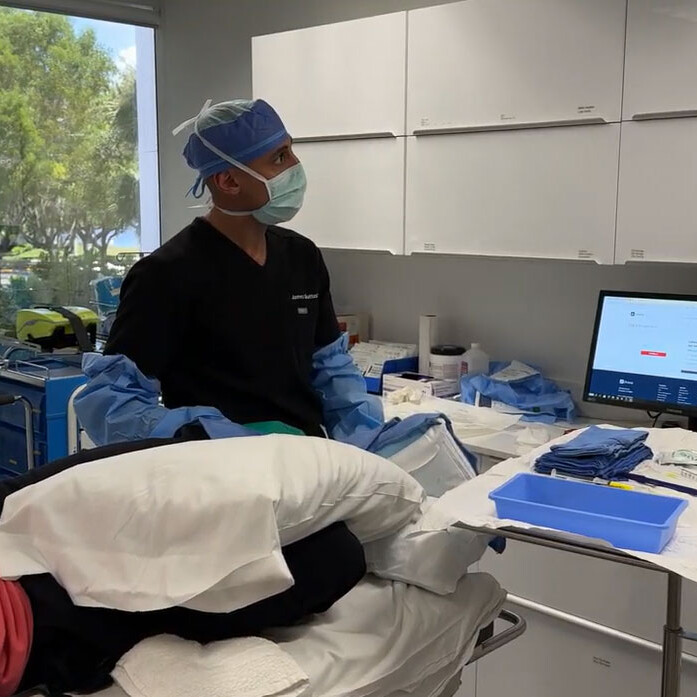
Before recommending any treatment, Dr. Ghattas personally reviews your diagnosis and imaging. Every procedure he performs uses real-time ultrasound or fluoroscopic guidance, rather than being placed without direct visualization.
●THE PATIENT JOURNEY
What Happens Next
01
Tell Us What Is Limiting You
Share your symptoms and goals.
02
Meet With Dr. Ghattas
Your condition, history, and imaging are evaluated in person.
03
Understand the Diagnosis
You learn specifically what’s driving your pain.
04
Review Your Candidacy
You get a clear, honest answer on whether treatment may be appropriate.
05
Move Forward with Clarity
If appropriate, a plan is built around your goals.
NEXT STEP
Start With a Clearer Understanding of Your Condition
You do not need to choose a procedure before reaching out. The first step is understanding what is causing the problem and whether a precise,
non-surgical option may be appropriate.
Disclaimer — Results vary. Not all patients are candidates for orthobiologic treatment. Dr. Ghattas will discuss whether treatment is appropriate for your specific condition.